Transforming Communities: Unlocking Funding for Lead Remediation in NJ Municipalities
January 13, 2026
Over two million homes in New Jersey may contain lead-based paint, which can cause neurological and organ damage if ingested or inhaled. An unprecedented amount of grant funding is available for homeowners and landlords to fix lead paint hazards, and municipal leaders play a crucial role in protecting their communities from lead poisoning.
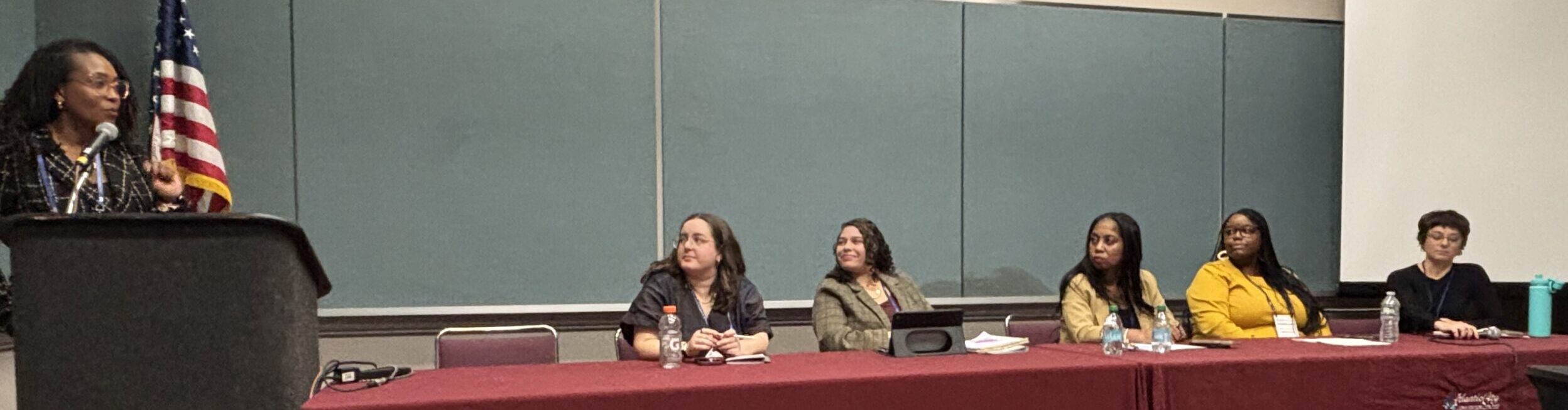 At the 2025 New Jersey League of Municipalities conference, the National Forum for Black Public Administrators hosted a panel to discuss this urgent opportunity for primary lead exposure prevention. Coordinated by Marc Dashield and moderated by Tenisha Malcolm-Wint, panelists included (pictured left to right) Natasha Tabachnikoff, Healthy Housing Policy and Technical Assistance Coordinator of Green & Healthy Homes Initiative, Kia King, Chief of Staff of New Jersey Department of Community Affairs, Ketlen Baptiste-Alsbrook, Director of Newark Department of Health and Community Wellness, Shanikwa Lemon-Watson, Executive Director of Paterson Alliance, and Alix Fellman, Director of Community Development of Trenton Health Team.
Municipalities play an important role as trusted partners in connecting residents to lead paint remediation funding. The panelists advise the following actions:
Know and Engage Your Local Resources
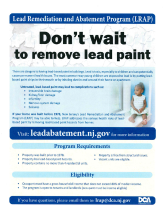
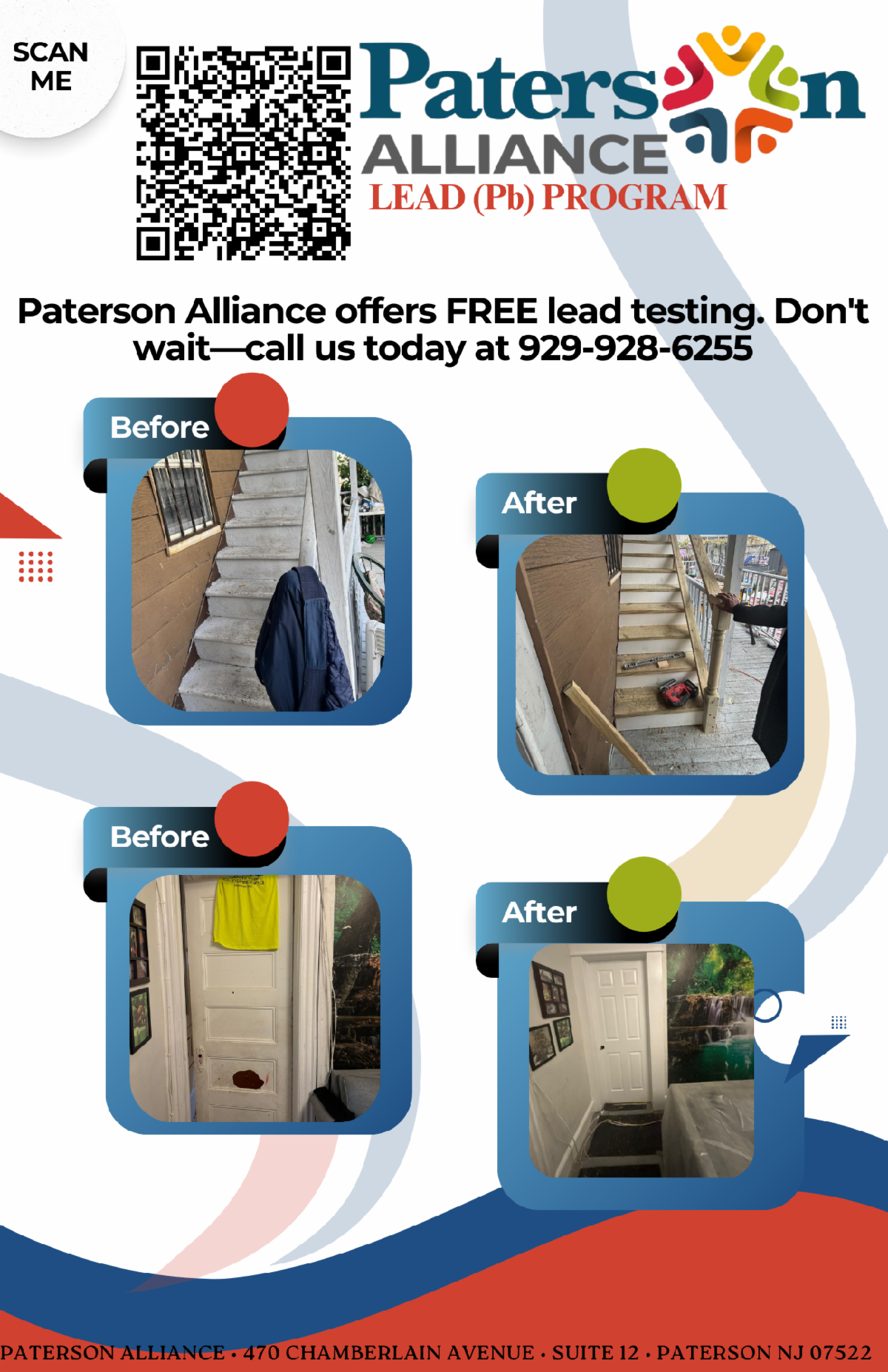 Over 50 community organizations throughout New Jersey are administering the NJ Lead Paint Remediation and Abatement program (LRAP), providing grants to eligible housing units and coordinating lead paint remediation with qualified contractors, explained NJ DCA Chief of Staff Kia King. Find out which organization is operating in your local area by reviewing the DCA website or contacting [email protected]
Shanikwa Lemon-Watson’s organization, Paterson Alliance, described its LRAP process serving Paterson households: First, staff conduct an initial eligibility assessment to identify if there is lead in the home and if the household meets income eligibility. Then, they walk the client through the formal program application, conduct a complete lead risk assessment, and coordinate remediation work with lead-safe certified contractors.
The panelists described how they have engaged a diverse array of local community-based organizations to spread awareness of the LRAP program and improve healthy homes services, including social service providers, community health workers, faith-based organizations, grocery stores, Federally Qualified Healthcare Centers, pediatric practices, Women Infant and Children (WIC) offices, schools, and door-knocking campaigns. Employing trusted community messengers will strengthen your local network, help people access wrap-around services to meet additional needs, support cultural competency and language access, and build trust.
As Alix Fellman of the Trenton Health Team put it, “make sure your local referral network is really strong.”
Get creative – engage local partners who can fill gaps in program services. For example, the City of Newark partnered with a philanthropic funder several years ago to purchase lead-safe housing within the city, ensuring families have a safe, local place to stay if they must relocate during lead paint remediation or abatement work.
Enable Local Interdepartmental Collaboration
Lead exposure prevention is a complex issue that requires coordination between health and housing departments. Ensure that collaboration is built into local procedures, as working in silos hurts both your efficiency and the experience of families already burdened by lead exposure. Director Alsbrook explained that Newark requires a certificate of habitability, which includes the lead-safe certificate (as mandated by NJ state law), for rental dwelling registration. This process requires collaboration between three local departments: Economic Development, Housing, and Health.
As Director Alsbrook explained, “you have three different departments with their own specific responsibilities and objectives, that when they are aligned and working together, can feed off of each other.”
Additionally, the Mayor and all department directors receive regular updates on the City’s lead programs at weekly meetings, showcasing interdepartmental collaboration from Newark City leadership.
Coordinate Lead Remediation Grants with Lead Paint Inspection Law Efforts
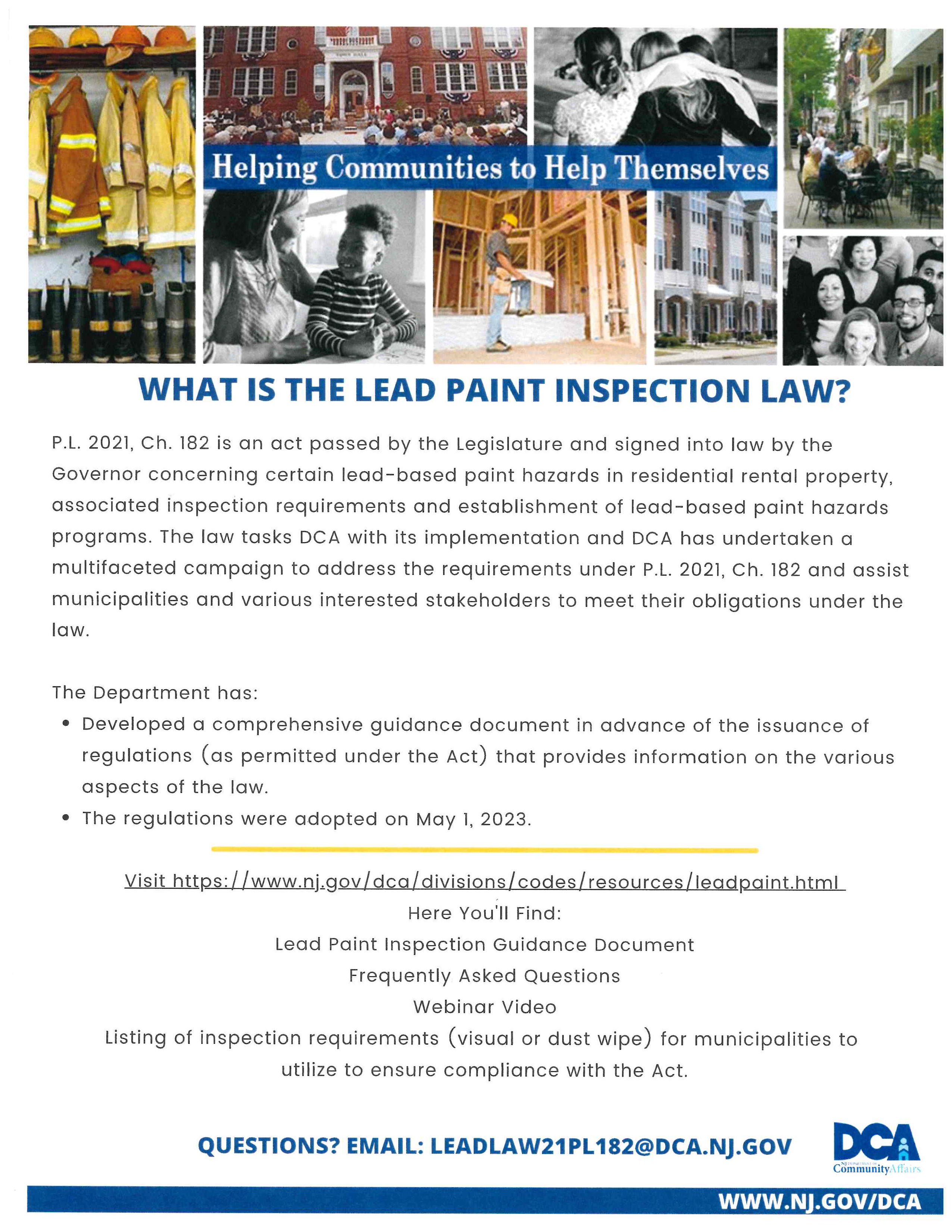
 Under P.L. 2021, c. 182, municipalities are required to either perform or hire a certified lead evaluation contractor (or allow owners/landlords to hire their own evaluator) to periodically inspect certain rental dwellings for lead-based paint hazards. Municipalities must also maintain a record of qualified dwellings, inspection schedules, inspection results, and tenant turnover, all lead-safe certifications issued, and all lead-free certifications issued.
As you undertake your town’s obligations to conduct lead paint inspections, ensure that you provide referrals to local LRAP organizations as a resource for free lead paint remediation to address any hazards identified during inspection. Panelists described this coordination as efficient, effective at building a pipeline of landlords agreeing to participate in the LRAP program, and providing a means of financial assistance for resource-constrained landlords.
Get Involved with Collaboration and Advocacy
New Jersey’s historic investment of $180 million in American Rescue Plan Act funds for lead paint remediation and abatement created an opportunity to protect thousands of New Jerseyans from lead paint hazards. As of November 2025, 1,891 housing units have been completed, and the DCA anticipates completing 7,200. Several challenges exist for implementing this program, including a short timeline to spend these funds (they must be spent by December 2026), fear of landlord retaliation, language barriers, documentation status, the priority of other household needs over lead hazard concerns, and siloed bureaucratic public systems.
Although there is no perfect solution for all of these concerns, the guidance provided by panelists, including: know and engage your local resources, enable local interdepartmental collaboration, and coordinate lead remediation grants with lead paint inspection law efforts, will help you navigate these barriers.
 You should also join the Lead-Free NJ collaborative to receive information updates on lead paint remediation programs, collaborate with other people working on these issues, and get involved with lead exposure prevention advocacy. Natasha Tabachnikoff staffs the Lead-Free NJ Housing Committee, Alix Fellman is Co-Chair of the Committee, and Shanikwa Lemon-Watson hosts the Lead-Free NJ Community Hub in Paterson. Future work will include advocating for lead paint remediation funding after the current American Rescue Plan Act funds expire, as well as utilizing data more effectively to target efforts aimed at reducing lead exposure. Contact [email protected] and visit www.LeadFreeNJ.org