Impacted Parents, State Leadership, Practitioners, and Advocates United for Lead Poisoning Prevention at the 2025 NJ Lead and Healthy Homes Convening
At the June 2025 NJ Convening on Healthy Homes & Lead Poisoning Prevention, hosted by Green & Healthy Homes Initiative and The Cooperative, attendees gathered to collaborate on pressing challenges.
Parents Call for Sustained Lead Paint Remediation Funding, Trusted Community Messengers, and Improved Communication from NJ Health Departments
A panel of parents, including Shaneice, Leticia, and Holly, whose children have been affected by lead exposure, shared their experiences with the full convening audience, which included Acting Commissioner of the Department of Health Jeff Brown and the Commissioner of the Department of Community Affairs Jacquelyn Suárez. The panelists are pictured below alongside Lead-Free NJ staff, Green and Healthy Homes Initiative staff, Lead-Free NJ community hubs PRAC of Southern NJ & East Trenton Collaborative, and NJ DCA Commissioner Suárez.

The parents’ remarks affirmed the importance of adequate funding for New Jersey’s Lead Paint Remediation and Abatement Program (LRAP), which provides grants and project coordination to fix lead paint hazards. Holly and Leticia were both able to access this program through Puerto Rican Action Committee (PRAC) of Southern NJ, after their local health department informed them that their children had been exposed to lead paint at home. The necessary lead paint remediation work was extremely expensive and would not have been possible without a grant and project management from LRAP. This resource was not only a financial support, but it was also a logistical and emotional support as the families navigated the complex and anxiety-inducing communications they received from the health departments. Leticia, who provided remarks in Spanish, relied on PRAC’s ability to administer the program with Spanish language accessibility.
The stories of lived experience elevated actionable solutions to address gaps in public support systems for lead poisoning prevention, including stronger engagement with trusted community messengers and improved communication from NJ health departments. Shaniece explained how the East Trenton Collaborative acted as a trusted messenger in the community, providing information about lead exposure prevention. Her experience motivated Shaniece to share her experience with others.
Holly explained how urgent communication from the health department added unnecessary stress on her family when she was navigating her child’s elevated blood lead levels and lead paint abatement at her home. The notice she received from the health department informing her that her property must be abated for lead paint, at risk of lien to the property or court order, did not provide information about resources to help her comply. When a parent is navigating the already stressful and complicated situation of a sick child, the health department should at a minimum, inform them of the NJDCA’s Lead Paint Remediation and Abatement Program, and connect the family with community-based organizations that can help navigate available resources.
This panel was made possible by the support of Lead-Free NJ community hubs support from Geovannie Cantizano, PRAC of Southern NJ, and Enriqu Landa, East Trenton Collaborative.
Commissioners Respond to Lived Experience Experts and Provide Information Updates
Disclaimer: This information was provided in June 2025, and information may have changed since then.
Following the panel of lived experience experts, Commissioners and representatives from the NJ Departments of Environmental Protection, Health, and Community Affairs reflected on their remarks, echoing the importance of preserving the state’s LRAP grant so that funds remain available to support families with the complex work of lead paint remediation. Acting NJDOH Commissioner Brown shared that prior to joining the NJDOH, he advocated for the state to protect this funding when it was diverted away from its intended purpose and into the general fund.
NJDCA Commissioner Suárez remarked, “When a family hears that a child has an elevated blood lead level, everything else goes dark, because they’re trying to focus now on what they do next. We are the next step.”
Through the NJDCA’s Lead Paint Remediation and Abatement Program (LRAP), over 50 community organizations throughout the state provide households with grants for lead paint remediation and coordinate the work with certified local contractors. A historic investment of $180 million from American Rescue Plan Act funding has allowed the program to fix home lead hazards at an unprecedented projection of 7,200 housing units. The Commissioner asked the group for help with achieving this goal by referring clients to the program. 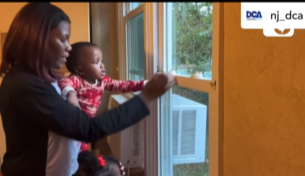
This funding is significant, but it expires in December 2026 and does not address the ongoing need for over 2 million homes in New Jersey that are likely to have lead paint. Commissioner Suárez also appealed to the group to utilize their experience and passion to advocate for continued funding of New Jersey’s strong lead paint remediation and abatement program, as well as other lead poisoning prevention efforts, at the state and federal levels. She pointed out that these are efficient public investments that improve the well-being of their constituents and far outweigh the cost of allowing lead poisoning to continue.
Pictured right: LRAP client, Paris, shows windows replaced through NJDCA LRAP to eliminate lead paint exposure in her home.
NJDEP Deputy Commissioner Kati Agarone provided the group with updates on lead in drinking water prevention, proudly referencing New Jersey’s pioneering law requiring lead service line replacement statewide by 2031, which contributed to EPA rules requiring replacement nationwide. As of June 2025, 26,000 lead service lines had been replaced in NJ, 136,000 are known to be lead and must be replaced, and close to 900,000 are of unknown status and could be lead. The NJDEP has provided technical assistance to 18 public water systems, along with millions of dollars in financing. In addition to supporting clean drinking water at home, the NJDEP will soon provide further support to the DOE’s testing of school drinking water for lead by building a data management system to centralize school test results in one dashboard. In addition to water, NJDEP is working closely with the EPA on its investigation of lead-contaminated soil in the East Trenton neighborhood, advancing efforts to add Superfund abatement to the city.
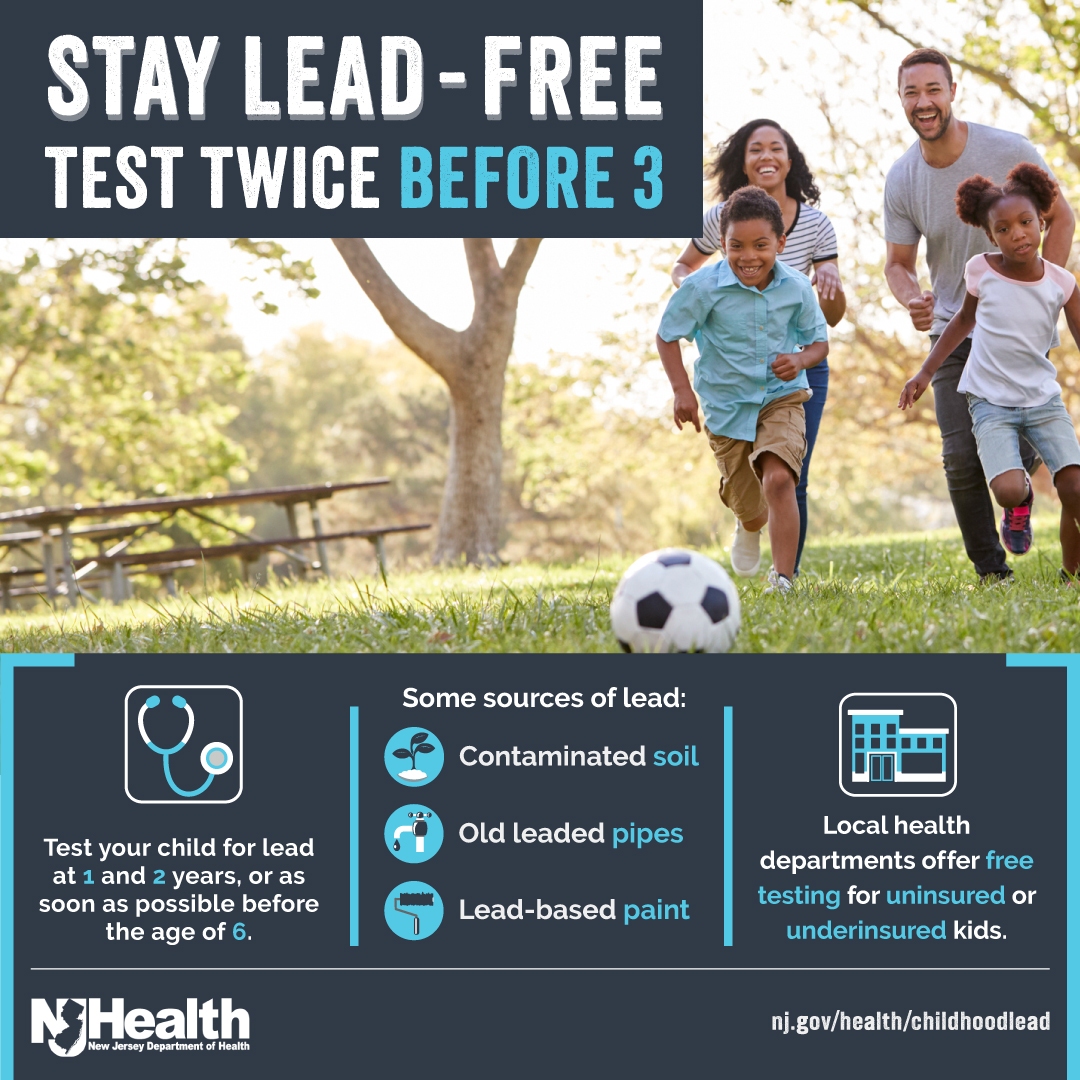 Acting Commissioner Brown provided more details on NJDOH’s achievements, including continued workforce training, lowering the state blood lead reference value to reflect US CDC standards, their public awareness campaign to test children for lead twice before the age of 3 (pictured left), and providing access to blood lead level test results in the myhealth NJ Docket app. Additionally, he shared that NJ is leading the nation in pilot programs testing for lead and mercury during pregnancy. He expressed concern about anticipated federal cuts to public health budgets, but encouraged the audience to educate their representatives on the importance of public health and healthy housing.
Lead exposure is disturbingly omnipresent in our environment (through old lead-based paint, old drinking water pipes, imported products, and contaminated soil), a fact that requires a multipronged regulatory structure of government intervention to protect the public. In the face of massive potential cuts to environmental health programming at the federal level, NJ leaders affirmed their commitment to lead poisoning prevention and addressing the social determinants of health through a strong legal structure, state funding, and passionate public servants.
Conference Breakout Sessions
Additional conference sessions included topics like lead testing during pregnancy, NJ’s lead paint inspection law, asthma, a “filter first” approach to eliminate lead in drinking water exposure, sustainable LRAP funding, community engagement, improving lead screening, and workforce development strategies. You can review the session presentations here: https://www.greenandhealthyhomes.org/new-jersey-convening-on-healthy-homes-lead-poisoning-prevention/